
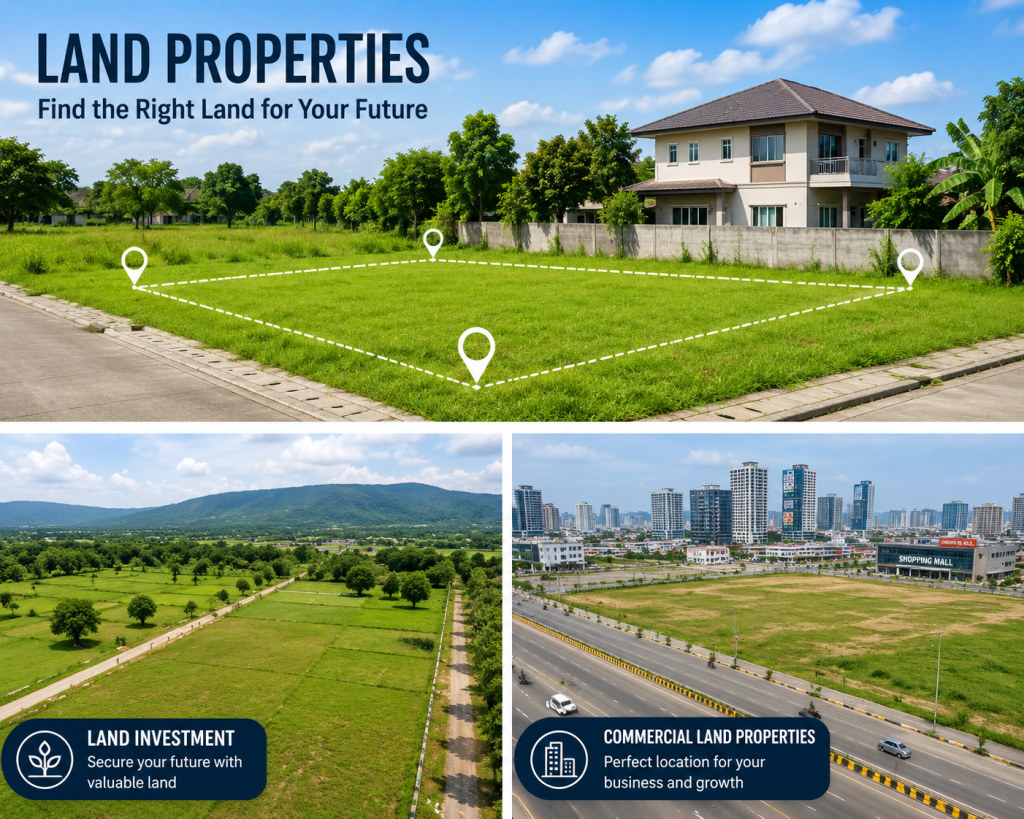
Land Properties I Find the Right Land for Your Future
Land properties are one of the most valuable real estate investments for individuals, families, and businesses. Whether you are planning to build a home, start a commercial project, develop an agricultural property, or simply invest for the future, choosing the right piece of land can provide long-term value and financial opportunities. Unlike many other investments, land is a limited natural resource. As cities expand and infrastructure develops, well-located land properties can become increasingly valuable. However, purchasing land requires careful planning, proper research, and attention to legal documentation. Why Invest in Land Properties? Investing in land can be an excellent way to build long-term wealth. One major advantage is that land does not require the same level of maintenance as a completed building or apartment. Furthermore, land in a growing area may appreciate in value as new roads, schools, shopping centers, and business facilities are developed nearby. Land properties can also offer flexibility. Buyers can use the land for residential construction, commercial development, farming, or other approved purposes depending on local regulations and zoning requirements. Types of Land Properties There are different types of land properties available for buyers and investors. Understanding these categories can help you choose the right property according to your goals. Residential of Land Properties Residential land is suitable for people who want to build houses, villas, apartments, or other residential projects. Location is especially important because access to roads, schools, hospitals, markets, and public transportation can influence both usability and future value. Commercial of Land Properties Commercial land is generally purchased for offices, shopping centers, restaurants, warehouses, hotels, and other business purposes. Land located near major roads, commercial zones, and busy neighborhoods may have strong investment potential. Agricultural of Land Properties Agricultural land can be used for farming, plantations, livestock, and other agricultural activities. Buyers should carefully check soil quality, water availability, accessibility, and applicable land-use regulations before making a purchase. Development Land Development land is often purchased by investors and property developers for larger projects. These properties may be suitable for housing developments, commercial complexes, or mixed-use projects, subject to planning permission and local regulations. What to Check Before Buying Land Buying land is a significant financial decision, so proper verification is essential. Before purchasing, buyers should investigate the property’s ownership history and confirm that the seller has the legal right to transfer ownership. It is also important to verify the land documents, boundaries, measurements, and applicable taxes. Buyers should check whether there are any disputes, mortgages, claims, or restrictions associated with the property. Additionally, consider the location and surrounding development. A property with good road access and nearby infrastructure can be more attractive than land in an isolated area. Location Matters Location is one of the most important factors when evaluating land properties. A good location can increase convenience today and investment value in the future. Look for areas with improving transportation, new infrastructure, residential growth, commercial activity, and essential services. However, buyers should not rely only on future promises. Always verify development plans through reliable and official sources before making an investment decision. Land Properties as a Long-Term Investment Many investors consider land a long-term asset because its supply is naturally limited. If an area experiences population growth and economic development, demand for land may increase over time. However, land investment is not automatically profitable. Market conditions, location, legal issues, accessibility, development restrictions, and purchase price can all affect the investment outcome. Therefore, investors should compare several properties and understand the risks before making a final decision. How to Choose the Right Land Choosing the right land property starts with identifying your purpose. Decide whether you want to build a home, operate a business, develop a project, use the land for agriculture, or hold it as an investment. Next, establish a realistic budget and compare properties in different locations. Examine road access, nearby facilities, future development, land size, shape, and legal status. Most importantly, work with qualified professionals when verifying documents and completing the transaction. Conclusion Land properties can be an attractive option for building a home, developing a business, or creating long-term investment value. With careful research and proper legal verification, buyers can reduce risks and make more informed decisions. Before purchasing any land, always examine the location, ownership documents, land records, boundaries, accessibility, and applicable regulations. A well-researched land investment can become a valuable asset and provide opportunities for future development and financial growth.
Land Properties I Find the Right Land for Your Future Read More »