
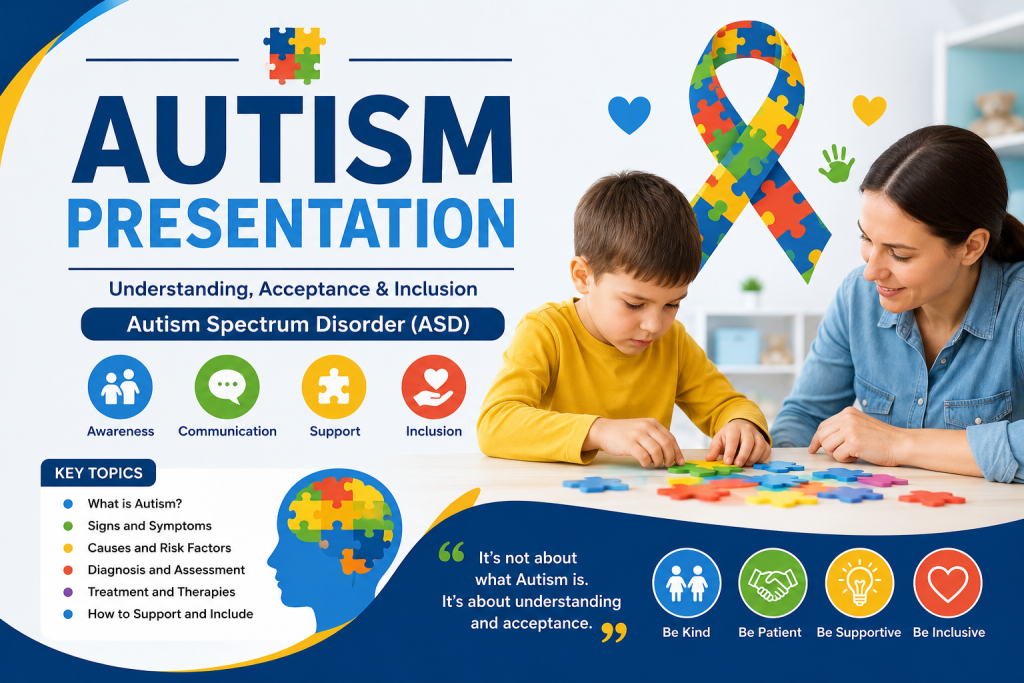
Autism Spectrum Disorder (ASD) is a neurodevelopmental condition that affects communication, social interaction, and behavior. An effective Autism Presentation helps students, teachers, healthcare professionals, and parents understand autism, recognize its early signs, and learn practical ways to provide support. This guide explains the key topics you can include in an Autism Presentation while also offering reliable information about ASD.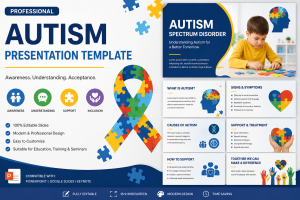
What is Autism Spectrum Disorder?
An Autism Presentation is an educational resource designed to explain Autism Spectrum Disorder in a clear and engaging way. It may be used in schools, universities, hospitals, workplaces, or community awareness programs.
A well-structured presentation usually covers:
- Definition of Autism Spectrum Disorder (ASD)
- Common signs and symptoms
- Causes and risk factors
- Diagnosis process
- Treatment and therapies
- Educational and family support
- Autism awareness and inclusion
Understanding Autism Spectrum Disorder (ASD)
What Is Autism Spectrum Disorder?
Autism Spectrum Disorder (ASD) is a lifelong developmental condition that affects how a person communicates, interacts with others, and experiences the world. The word “spectrum” means that autism varies widely from one individual to another. Some people need significant daily support, while others live independently.
Who Can Be Affected?
Autism can occur in people of all backgrounds, regardless of gender, ethnicity, or nationality. Many signs appear during early childhood, although some individuals are diagnosed later in life.
Common Signs and Symptoms of Autism
An Autism Presentation should explain the common signs clearly.
Social Communication Differences
- Limited eye contact
- Difficulty understanding social cues
- Challenges starting or maintaining conversations
- Preferring solitary activities
Behavioral Characteristics
- Repetitive movements or behaviors
- Strong preference for routines
- Highly focused interests
- Sensitivity to sounds, lights, textures, or smells
Not every autistic person has the same characteristics, and abilities vary from person to person.
What Causes Autism?
Researchers believe autism develops through a combination of genetic and environmental factors. There is no single known cause.
Possible contributing factors include:
- Genetic influences
- Differences in early brain development
- Certain prenatal or pregnancy-related factors
There is no scientific evidence that routine childhood vaccines cause autism.
How Is Autism Diagnosed?
Early diagnosis can help children and families access appropriate support.
Healthcare professionals may use:
- Developmental screening
- Behavioral observations
- Parent interviews
- Standardized diagnostic assessments
If parents notice developmental concerns, they should consult a qualified healthcare professional for evaluation.
Treatment and Support for Autism
There is no cure for autism, but many interventions can improve communication, learning, and daily living skills.
Early Intervention
Early support often leads to better developmental outcomes.
Speech and Language Therapy
Helps improve communication skills.
Occupational Therapy
Supports daily living skills and sensory processing.
Behavioral Therapy
Can help develop social, communication, and adaptive skills based on individual needs.
Educational Support
Inclusive classrooms, individualized teaching strategies, and appropriate accommodations can help autistic students succeed.
Why Autism Awareness Matters
An informative Autism Presentation promotes understanding rather than stereotypes. Increased awareness can help create supportive schools, workplaces, and communities.
Benefits include:
- Reducing stigma
- Encouraging early diagnosis
- Supporting inclusive education
- Improving acceptance
- Helping families access resources
Professional ASD Presentation Template
When preparing your presentation:
- Use simple, respectful language.
- Include clear diagrams or charts.
- Focus on evidence-based information.
- Avoid myths and stereotypes.
- Use real-life examples where appropriate.
- End with key takeaways and helpful resources.
Conclusion
An effective Autism Presentation provides accurate information about Autism Spectrum Disorder while encouraging understanding, inclusion, and respect. Whether your audience consists of students, teachers, healthcare professionals, or parents, presenting reliable information can improve awareness and help create a more inclusive society for autistic individuals.
Frequently Asked Questions
What is Autism Spectrum Disorder?
Autism Spectrum Disorder (ASD) is a developmental condition that affects communication, social interaction, and behavior.
Can autism be cured?
Autism is a lifelong condition. However, therapies and support can help individuals develop important skills and improve quality of life.
What are the early signs of autism?
Common early signs include differences in communication, limited eye contact, repetitive behaviors, and sensitivity to sensory input.
Why is autism awareness important?
Awareness promotes acceptance, encourages early support, and helps create inclusive communities for autistic individuals.